“Yoga allows you to rediscover a sense of wholeness in your life, where you do not feel like you are constantly trying to fit broken pieces together.”- B.K.S. Iyengar
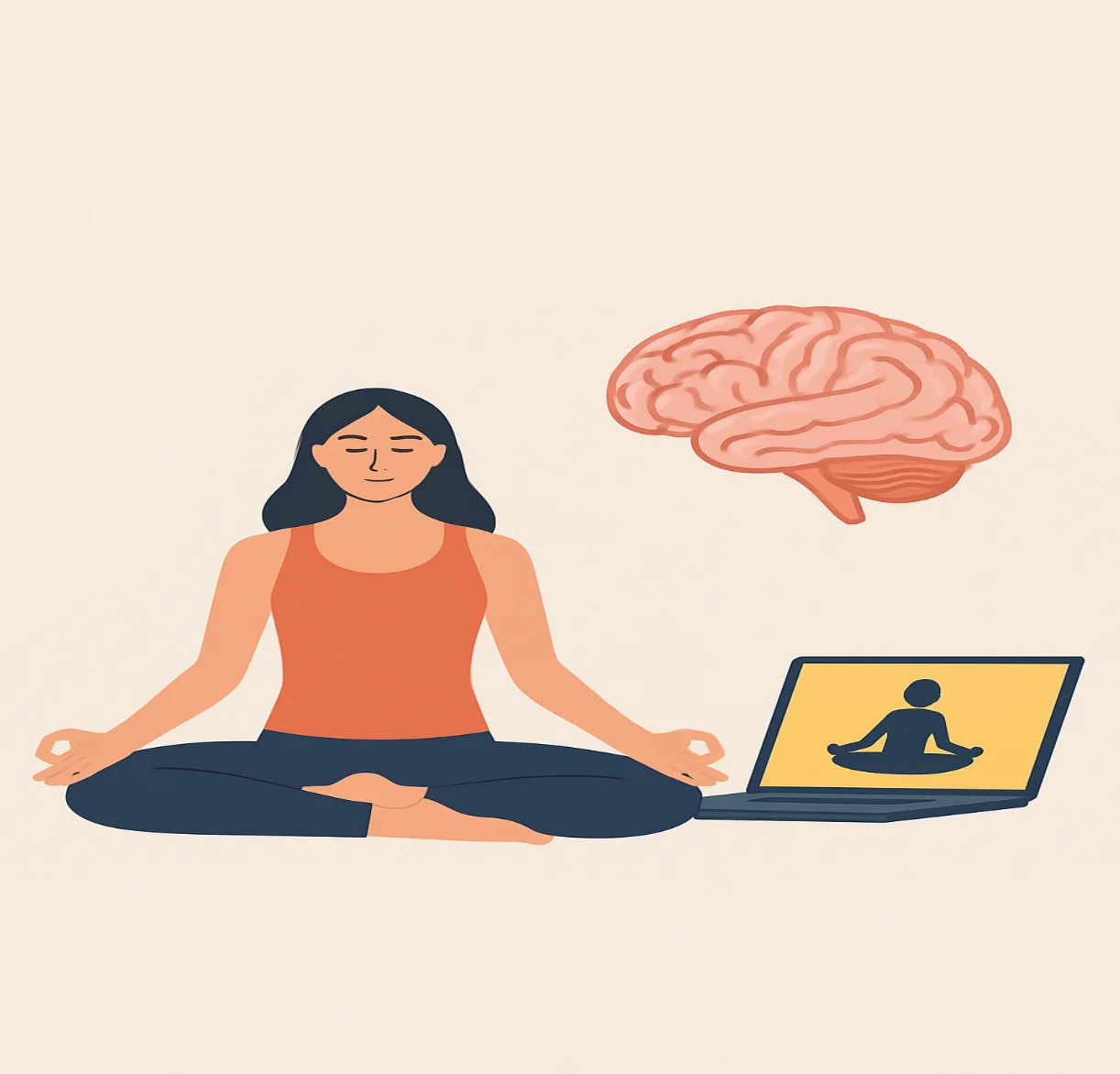
The prefrontal cortex (PFC) is sometimes called the “CEO of the brain.” It guides us to concentrate, control impulses, make decisions for the future, and calm emotional reactions. When the PFC is under strain—due to stress, trauma, or ageing—our ability to think clearly and regulate emotions is often impaired. (Marchand, 2014).
The ancient system of healing, such as Yoga and meditation, is increasingly studied because it blends movement, breathing, and attention training. These practices are inexpensive, accessible, and safe, making them appealing not just to the scientists but also to psychotherapists who want effective tools for their clients (Calderone et al., 2024; Gothe et al., 2019).
Why Do Psychotherapists Recommend Yoga and Meditation?
Psychotherapists are trained to help people with stress, anxiety, depression, and trauma related to various mental health issues. In recent years, many therapists have started recommending yoga and meditation alongside traditional therapy for several reasons:
- Stress relief. Stress hormones, like cortisol, can weaken PFC functioning. Yoga and meditation reduce stress responses, protecting the PFC and improving calm focus (Pascoe et al., 2017).
- Support for mental health conditions. Studies show that these practices ease symptoms of anxiety, depression, and post-traumatic stress disorder (PTSD). They help balance brain circuits between the emotional centers and the PFC, improving control over fear and negative thoughts (Hofmann et al., 2010; van der Kolk et al., 2014).
- Sharper thinking. Because the PFC is central to focus, memory, and self-control, practices that train attention—like mindfulness meditation—improve these skills. Even brief daily sessions can influence mood, memory, and attention (Basso et al., 2019; Tang et al., 2015).
- Accessible and empowering. Unlike medication, yoga and meditation are skills people can learn and practice anywhere. This gives clients and patients the tools to manage stress and emotions outside the therapy room.
- Mind-body healing. Trauma often presents itself as tension, pain, or restlessness in the body. Yoga, by combining mindful movement and breathing, helps people reconnect with their bodies in sustainable ways, supporting emotional healing (van der Kolk et al., 2014).
What Does Science Show About the Brain?
Research has used brain scans and other tools to see how yoga and meditation affect the PFC:
- Brain structure: Long-term yoga practitioners and meditators sometimes show a thicker cortex (the brain’s outer layer) in PFC areas linked with attention and decision-making (Fox et al., 2014; Afonso et al., 2017).
- Brain activity: During or after meditation, blood flow and oxygen use in the PFC often increase, indicating that this part of the brain is able to function efficiently.(Deepeshwar et al., 2015; Adachi et al., 2024).
- Brain networks: Mindfulness training strengthens connections between the PFC and other networks that control attention and emotion (Bremer et al., 2022).
- Short vs. long-term effects: Improvements in mood, attention, and self-control often appear within weeks. However, lasting structural changes in the brain are usually found in people who practice regularly for months or years (Kral et al., 2022).
How Might These Practices Work?
Scientists believe yoga and meditation strengthen the PFC through several pathways:
- Practice makes plastic: Repeated focus and self-control exercises build stronger brain connections, and hence mental strength and resilience.
- Better blood flow: Deep breathing and relaxation improve circulation and perfusion to the brain, helping the brain do its job more efficiently.
- Lower stress: By calming the body, yoga and meditation reduce the “fight-or-flight” signals from the amygdala, making it easier for the PFC to stay in charge and activate the parasympathetic nervous system, helping to relax the body and mind.
- Healthy brain chemistry: Some studies suggest these practices boost brain chemicals such as dopamine and endorphins, which support growth and resilience.
How Much Practice Is Enough?
- For beginners: Even 10–20 minutes daily can improve attention and mood in a few weeks (Basso et al., 2019).
- For deeper changes: Months or years of steady practice are more likely to bring about structural brain changes (Fox et al., 2014; Afonso et al., 2017).
- Best approach: Combining meditation, breathing practices (pranayama), and yoga postures with journaling may give the most benefit since they support both mind and body (Gothe et al., 2019).
Psychotherapists recommend yoga and meditation because they are practical, empowering, and backed by science. These practices reduce stress, improve mood, and strengthen the prefrontal cortex—the part of the brain that helps us stay focused, balanced, and resilient. While quick attention and emotion regulation improvements are common, deeper brain changes likely require steady, long-term practice. Yoga and meditation are evidence-based practices worth exploring for anyone looking to boost mental clarity and emotional strength and evolve spiritually.