“Ah, free will. It’s an illusion. You think you have a choice, but the molecules in your brain are governed by physics, making the so-called choice inevitable. It’s like a lousy magic trick.”
-Sheldon, Big Bang Theory, S3E10 (“The Gorilla Experiment”).
Sheldon Cooper was not being cynical, just reading from his script on The Big Bang Theory, but he was entering into a war zone that has been raging for centuries among physicists, philosophers, neuroscientists, and spiritual masters alike. The profound mystery remains: Is free will a reality, or are we just spectators in a biological theater?
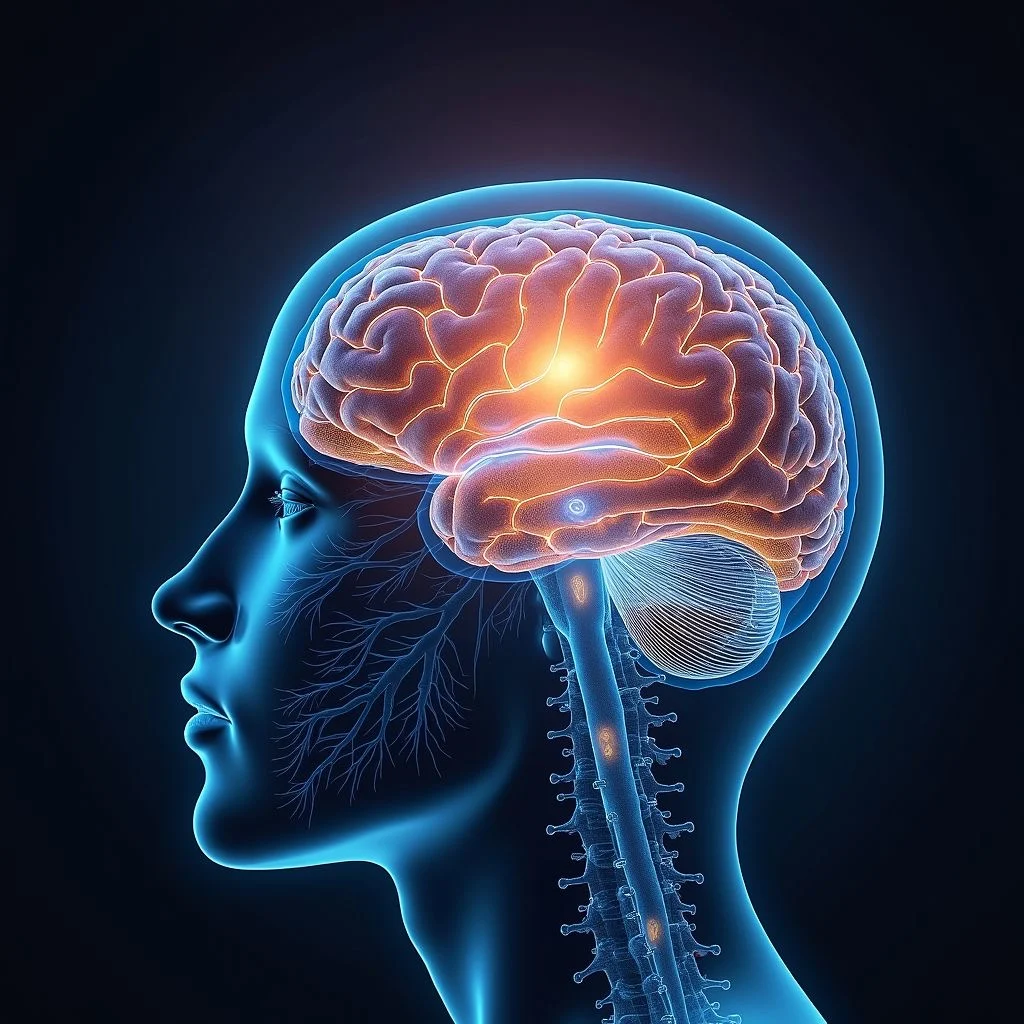
We held the pleasant idea for a long time and believed that we are the owners of our own minds. However, in 1983, Benjamin Libet, a neuroscientist, put a spanner in the works of human agency. In a seminal study Libet watched brain activity as people made simple, voluntary movements. He found something odd: a wave of neural activity called the “readiness potential” that appears several hundred milliseconds prior to the person’s conscious decision to move. In other words, the brain had already started to make the decision and only after the person actually made the choice did they even know they were making one.
This ignited a firestorm. If this is the case, then what becomes of moral responsibility? Do we take ownership for our decisions or are we just falling dominoes?
The plot was complicated again after a number of years. Neuroscientist Patrick Haggard repeated Libet’s experiments, and in the late 90s he found evidence that the brain’s signals always precede consciousness. Then, in 2008, John-Dylan Haynes and his colleagues went one step further with the help of fMRI scans. They showed that the brain was more active than the participant was aware prior to making the decision. This discovery rocked the world for both science and philosophy. It seemed more like a pre-determination than a delay.
The growing evidence led to strong deterministic attitudes. In his book Free Will, famous neuroscientist and philosopher Sam Harris fought hard that we are mistaken in believing that we have free will. From his viewpoint, the “self” is simply a witness of the unconscious mind, which is controlling.
Stanford biologist Robert Sapolsky is taking this to the ultimate logical extreme. He is a recipient of the MacArthur “genius” award, and he makes no apologies for his hardline belief that there is no such thing as an autonomous choice. To him, all human behavior is biologically determined, a complex intermix of genetics, environment and immediate neurochemistry.
Not everyone considers humanity to be a bunch of meat-robots, though. Some philosophers such as Daniel Dennett suggested something more compatible: that even if a choice is generated subconsciously, it is still the person’s own and can be taken as a voluntary choice. Moreover, in 2019, there was a revival of the narrative of rigid determinism. It is important to note that the findings of the study led by Uri Maoz suggest that even if unconscious brain waves precede simple and random movement, active and conscious control may be required when making deliberate and value-based decisions.
The consequences of Sapolsky and Harris’ claims are weighty enough to shake the foundations of our society. What sense does it make to ask “what is the moral responsibility of people for their actions if they have no free will?”